James Freeman notes an embarrassing vote in the House of Representatives: Handful of House Democrats Vote to Denounce Murderous Marxism. (WSJ gifted link)
"Embarrassing" in the sense that the GOP designed it to embarrass Dems. But there's a local angle for Granite Staters:
Yes, the fact that just 12 out of 213 House Democrats were willing to stand up and condemn history’s most murderous ideology is still pathetic. Among the Democrats voting against the Crank resolution known as H.Res. 1490 was Rep. Chris Pappas (D., N.H.), who is perhaps not yet convinced that a late endorsement from former Vice President Kamala Harris can save him in a Senate primary against a democratic socialist. He’s among 192 Democrats who voted no. Eleven House Democrats didn’t vote and two, Reps. Maggie Goodlander of New Hampshire and Chrissy Houlahan of Pennsylvania, voted “present.”
Ms. Goodlander has her own primary challenge from a Sandernista. Yet recent polls still show the incumbent with a commanding lead, so this hardly seems like an excuse, even for those inclined to accept political expediency as a justification.
For those not plugged into New Hampshire politics, the democratic socialist running against Pappas in the primary next week is Karishma Manzur. Her latest allegation is described by Michael Graham in NHJournal: Manzur: I’m the ‘Real Democrat,’ Pappas Is the Sellout.
Karishma Manzur insists she’s not trying to drag the Democratic Party to the left. Instead, she’s trying to rescue it from “corporate Democrats” like U.S. Rep. Chris Pappas.
“I don’t even understand why we have to call ourselves progressives,” the U.S. Senate candidate said during an online town hall hosted by Progressive Democrats of America. “We should just call ourselves Democrats. It’s the corporate Democrats that need a new label because they have sold us out.”
And one of those corporate Democrats, according to Manzur, is Pappas.
“He has never co-sponsored Medicare for All,” she said. “He takes a lot of money from AIPAC. He has approved billions of dollars of weapons transfers to Israel to fuel a genocide. He voted to censure Rashida Tlaib.”
Pappas was one of 22 Democrats voting to censure Tlaib. This was back in 2023, before his spine gelatinized.
Tomorrow I plan to blog David Harsanyi's column, but here's a sneak preview link: The 'Gaza Genocide' Is a Hoax.
I'm torn about whether I want Manzur to beat Pappas in the primary. She'd be a weak candidate against her probable opponent in November, John E. Sununu. On the other hand, I'd like to think New Hampshire Democrat voters weren't buying the socialist shtick.
Also of note:
-
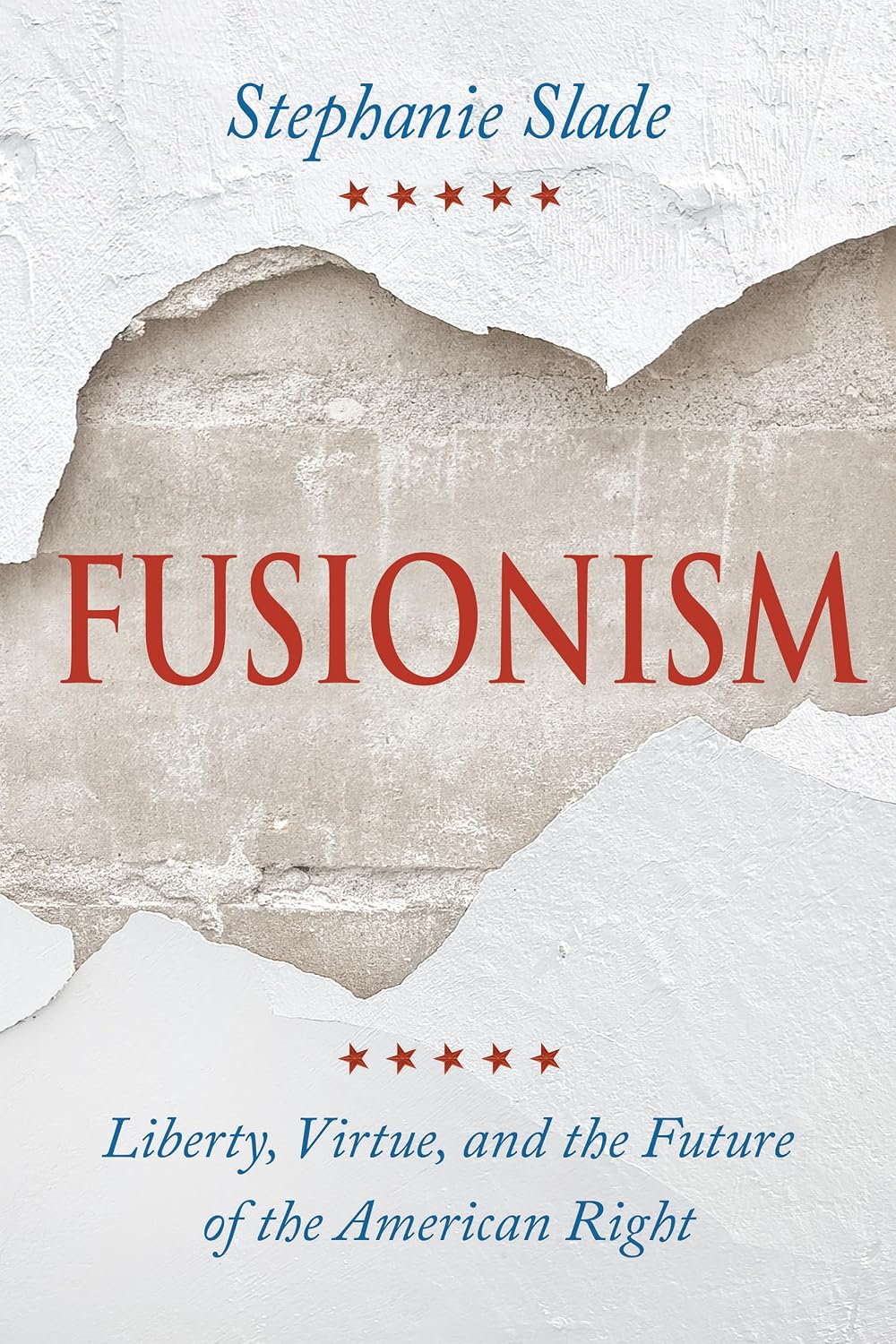
(paid link) More from Slade. I promise that I will report on my reading of Stephanie Slade's great book, Fusionism, Real Soon Now. Just not today. But to further whet your appetite, here's an "adapted-from" article at the WSJ: Meet the ‘Bronze Age’ Young Men of the New American Right. (WSJ gifted link)
When the Supreme Court this summer upheld the constitutionality of birthright citizenship, the right-wing internet erupted with rage. Prime among its targets were the four female justices who had signed on to the majority opinion. In one representative post on X, the Daily Wire’s Matt Walsh declared that “the worst Supreme Court Justices of all time have all been women. That’s just a fact. Republican presidents should take the hint.”
The outburst was in keeping with a strain of rhetoric popular among a subset of very online young men. It holds that women are too emotional to occupy positions of influence in society; that female suffrage was a mistake; and that the fairer sex’s purpose in life is to look good, make babies, and serve a husband’s every need.
To understand where all of this is bubbling up from, it helps to be acquainted with the “vitalists,” a certifiably weird subculture led by internet personalities with pseudonyms like “Bronze Age Pervert” (real name: Costin Alamariu) and “Raw Egg Nationalist” (real name: Charles Cornish-Dale), who look back longingly to a time when white men were in charge and other groups submitted humbly to rule by their betters.
And of course, you can always use the Amazon link at your right.
I'd like to think that Slade's just "nut-picking", and the "vitalist" influence is negligible compared to (say) the DSA's influence on the Democrats. But I dunno for sure.
-
And ego. Don't forget his ego. Jacob Sullum notes that we'll soon have a Trump Monument in DC. Specifically: Trump’s White House ballroom is a monument to his lawlessness.
After President Theodore Roosevelt began building the East Wing of the White House in 1902, he thanked Congress for approving the project and appropriating the necessary funds. When President Donald Trump demolished the East Wing last fall, by contrast, he acted without permission from Congress, which the Constitution empowers to control federal property.
That difference is unlikely to matter in practice, thanks to a stay the Supreme Court issued on Monday, which allows Trump to continue work on the huge ballroom he is building on the site of the East Wing. But Trump's insistence on acting unilaterally will make his vanity project a monument to his disregard for the rule of law and the separation of powers.
But that's not all…
-
Are there no limits to this guy's narcissism? On a related matter, Noah Rothman looks at yet another example of Trump's Petty Caesarism, as exhibited by…
Available for purchase today at 12PM ET: 2026 President Donald J. Trump $1 Coin. These coins are also in circulation, so check your pocket change. Collect them today! #CoinCollecting #America250https://t.co/g4eJes21ER pic.twitter.com/4OqkQ2sa9W
— United States Mint (@usmint) September 2, 2026Donald Trump’s visage is already circulating on these gold-finished brass coins. Some have taken exception to the “controversial move” of putting a sitting president’s face on legal tender, but their objections are unreasonable.
Sure, this hasn’t been done in 100 years, and the last person to do it was arguably the least imperial president in that century: Calvin Coolidge. Never mind that his face was partially eclipsed by George Washington’s. And like the 1926 coin, this one will cost a lot more than it’s worth.
“The rolls of $1 coins (25 to a roll) go for $61. A bag of 100 coins goes for $154.50,” ABC News reported. Likewise, back in 1926, “few people cared to part with the required $1 to purchase a commemorative half dollar,” the historian David Bowers observed. “When all was said and done, the staggering quantity of 859,408 half dollars went back to the Mint to be melted!” Perhaps the same fate is in store for Trump’s coins.
"Gold-finished brass"? Kinda cheesy, Don.
| Recently on the book blog: |


|